Tamalou01
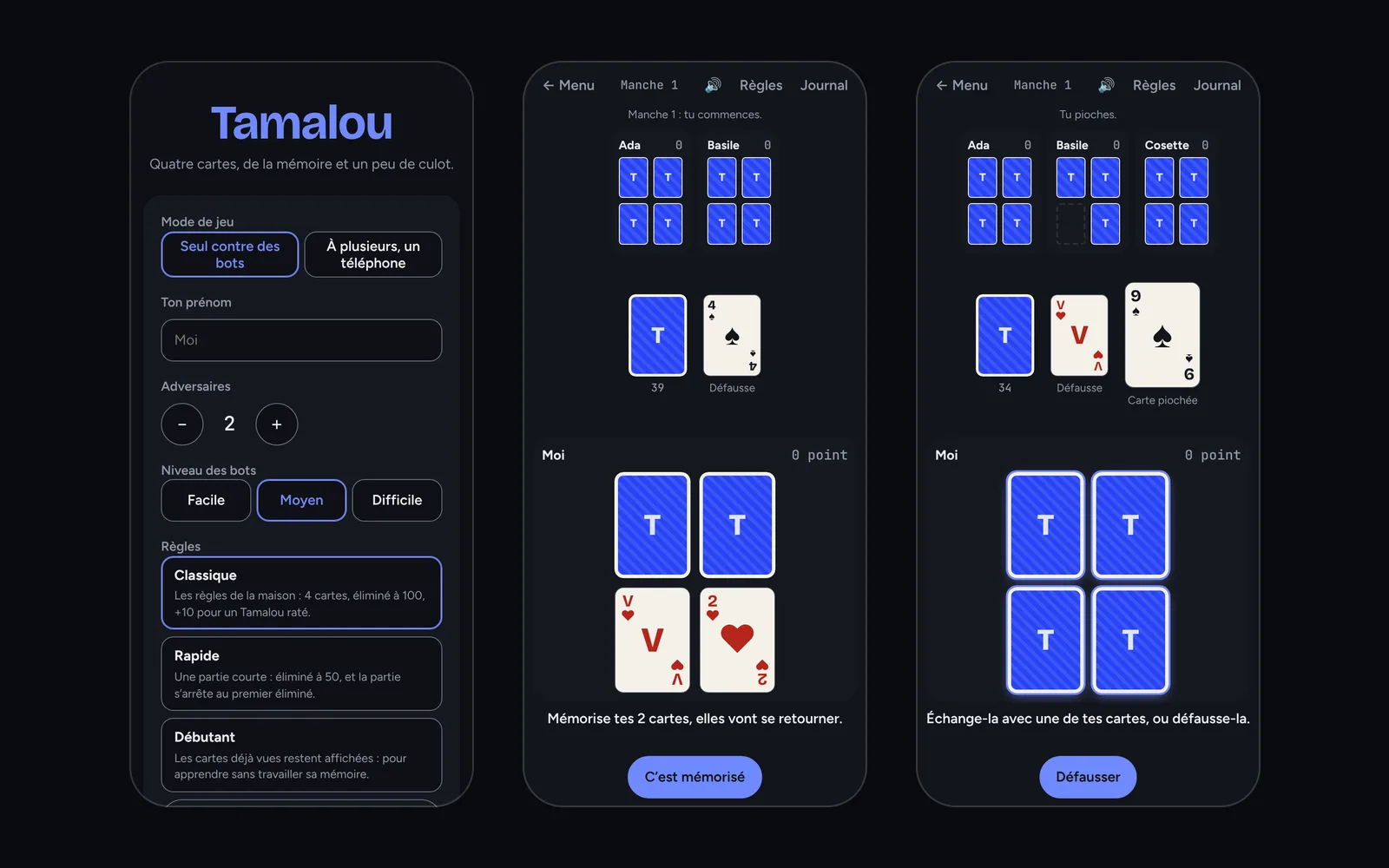
The French memory card game, played in the browser and made for the phone — solo against bots, around one phone, on the local network or online with a room code.






- Timeline
- Oct 2026 —
- Role
- design + build
- Author
- Steeve Pommier
- Stack
- TypeScript, React, Vite, Motion, Node.js, WebSocket, Cloudflare Workers, Durable Objects, Docker
- AI
- Vibecoded
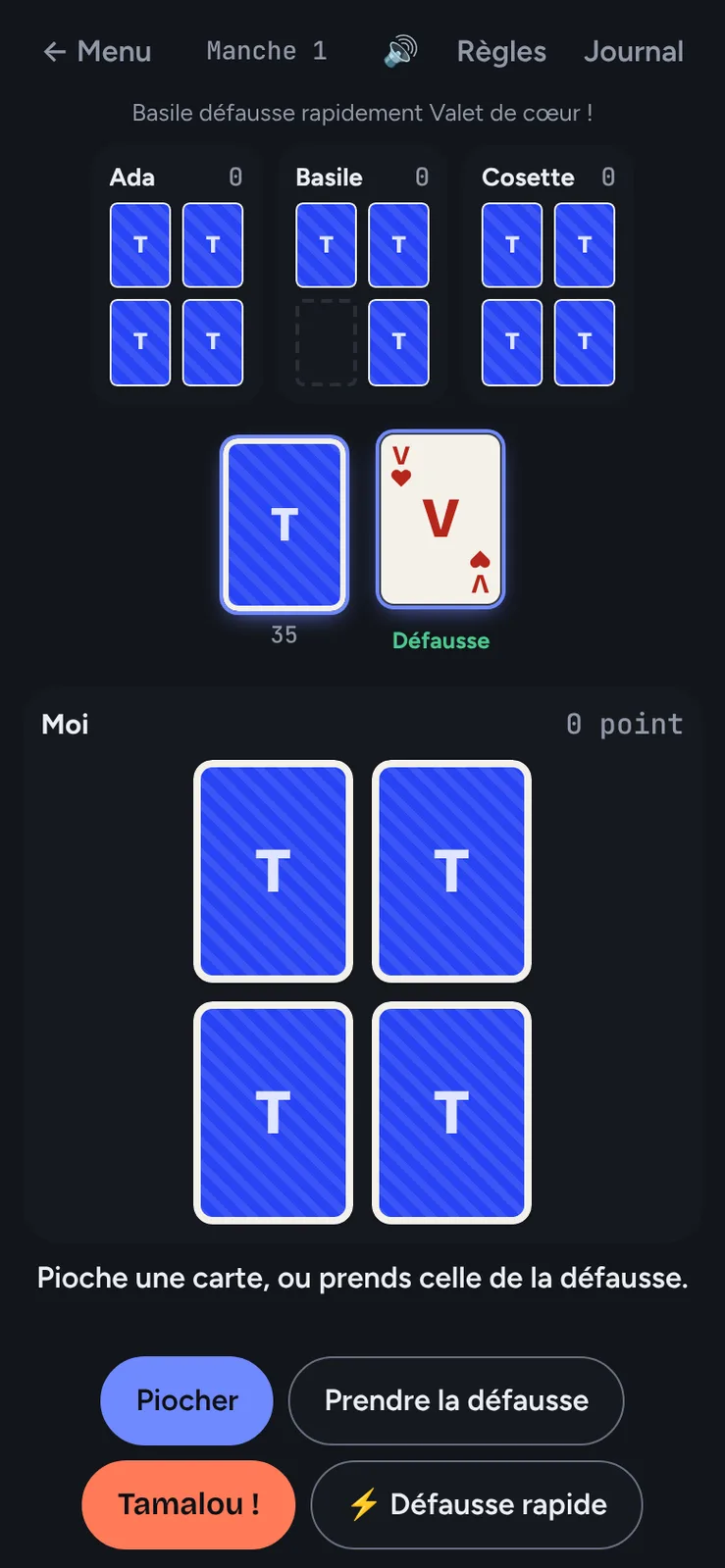
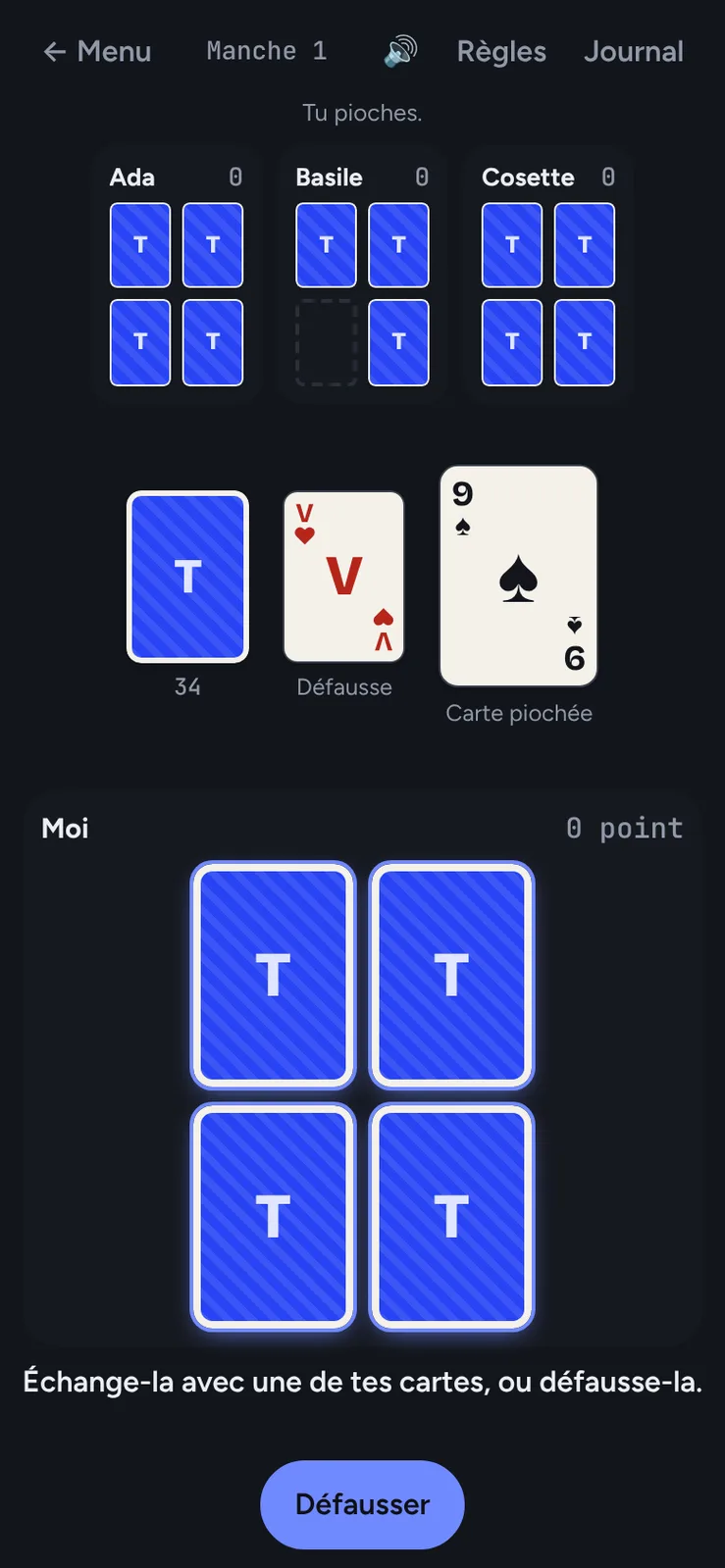
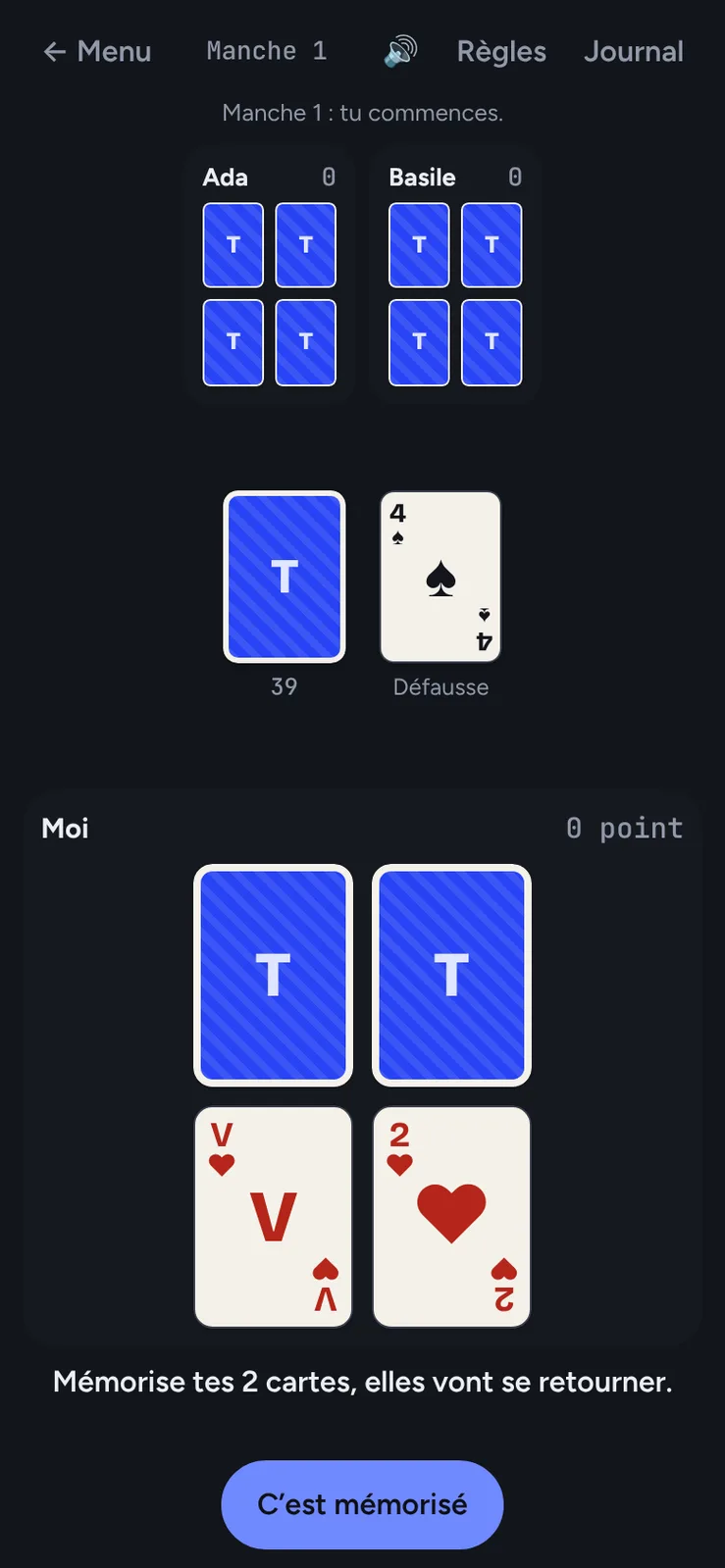
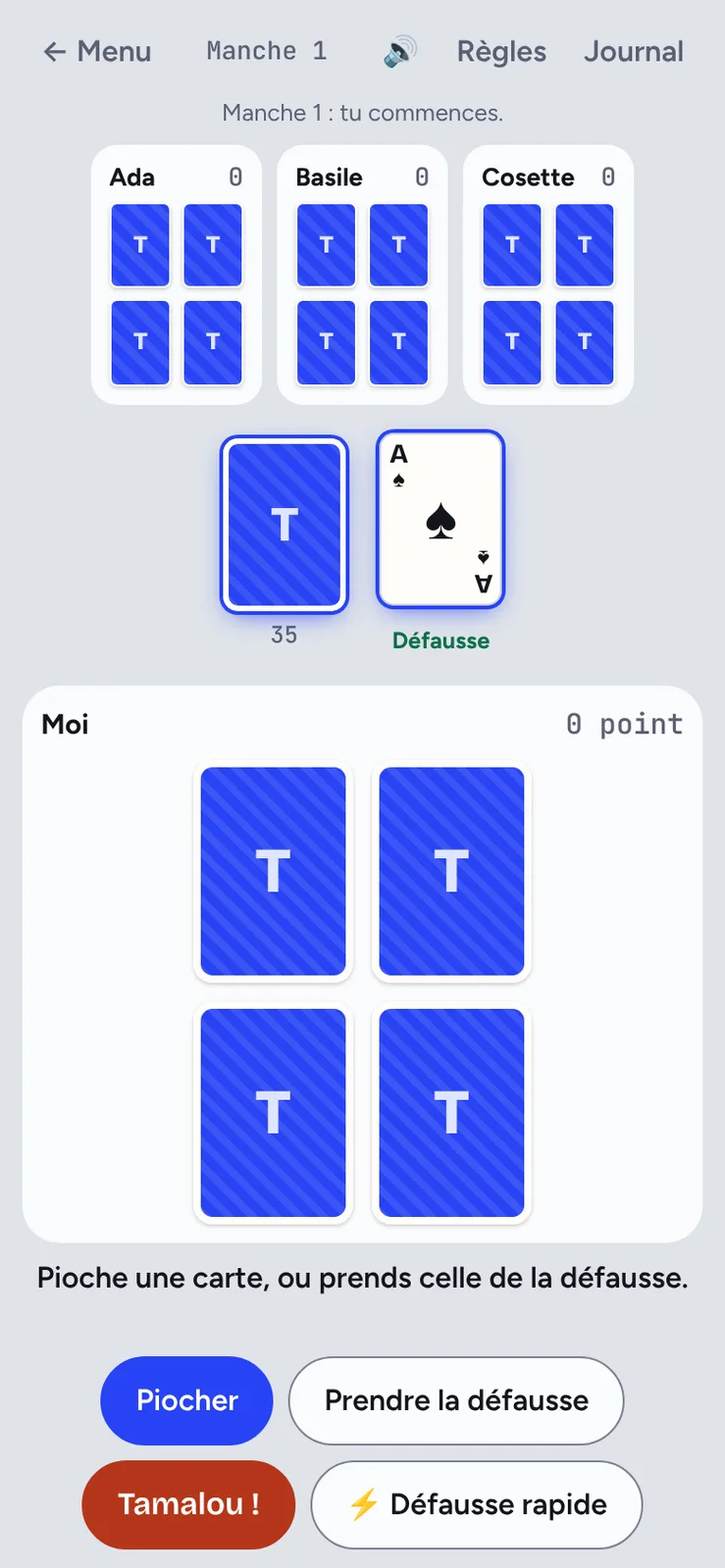
Four cards face down, a bit of memory and a bit of nerve. Each player sees two of their four cards once, then draws, swaps and discards to bring their total down, and calls “Tamalou!” to end the round when they think they hold the lowest hand.
The game as it is played at home
Powers trigger only when a card drawn from the deck is discarded straight away: a 7 or 8 to peek at one of your own cards, a 9 or 10 at an opponent's, a jack for a blind swap, a queen to look and then decide. Anyone, even out of turn, can lay a card of the same rank as the top of the discard pile — the quick discard; a wrong one costs a penalty card. Red kings are worth nothing.
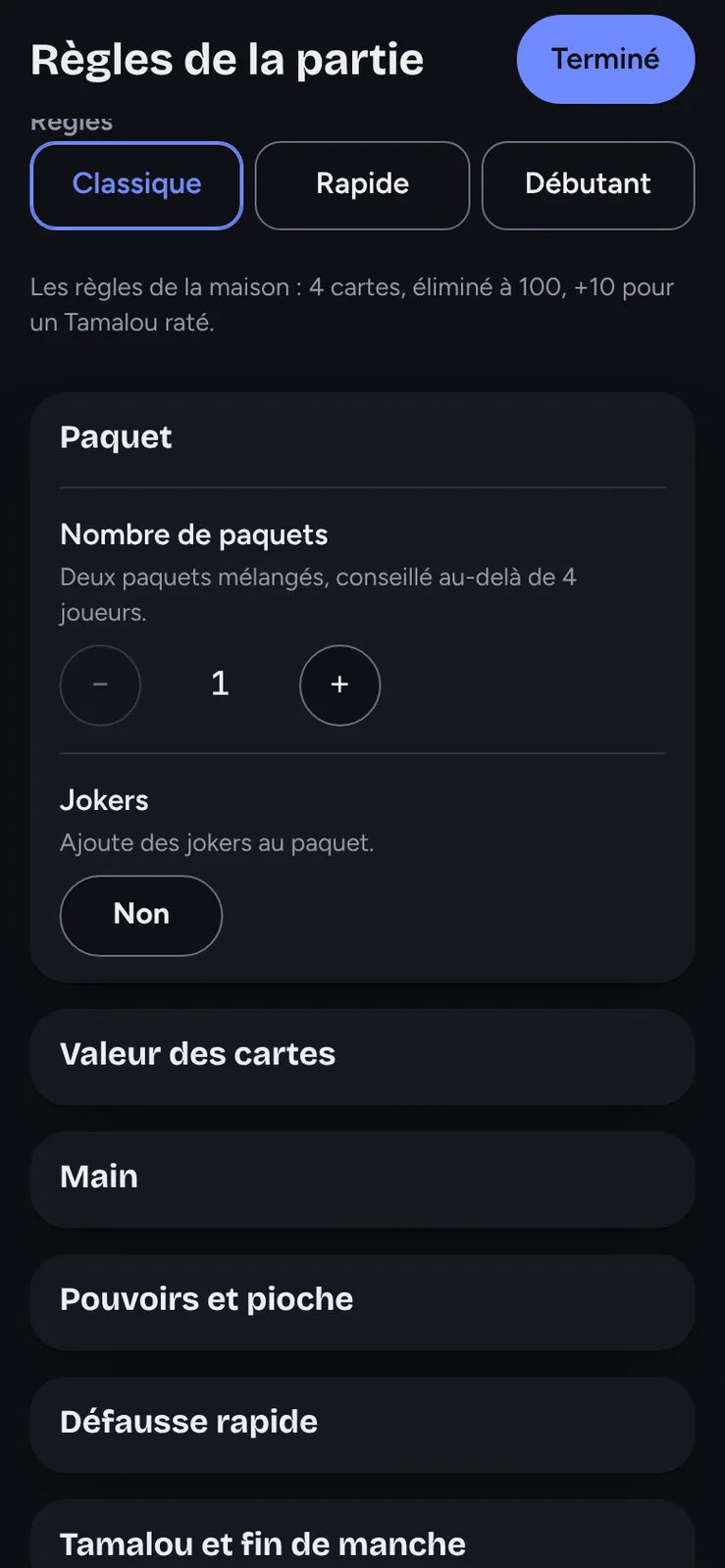
None of that is fixed: before the game, the host sets every rule — values, powers, penalties, the end of the game — starting from the Classic, Quick or Beginner preset, and can share the result as a link or a JSON file.
Four ways to play
| Mode | How |
|---|---|
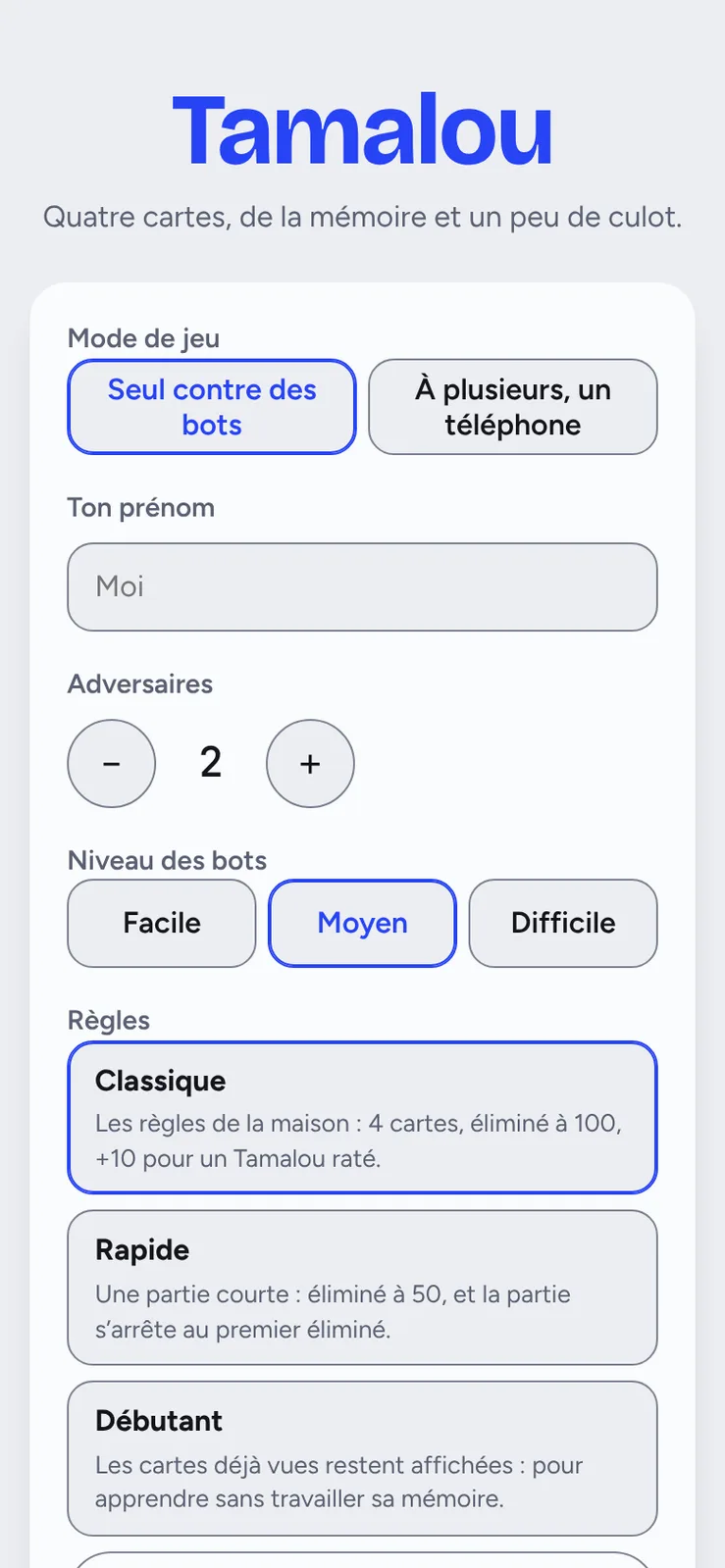
| Solo | Against one to five bots, offline once installed |
| One phone | Passed around the table |
| Local network | A small Node server, run from a Docker image on a home server; players scan a QR code |
| Online | A temporary room on Cloudflare, joined by code, link or QR code, no account |
The engine is pure: a game replays identically from its seed and its actions, and each player only ever receives their own filtered view. The bots play from that same view — easy plays at random, medium remembers imperfectly, hard remembers everything, estimates the unknown cards and picks its moment to call Tamalou.
It installs as an app, plays in French or English, with sounds and vibration.